Black people won a voice in this county. The Voting Rights case may silence it.
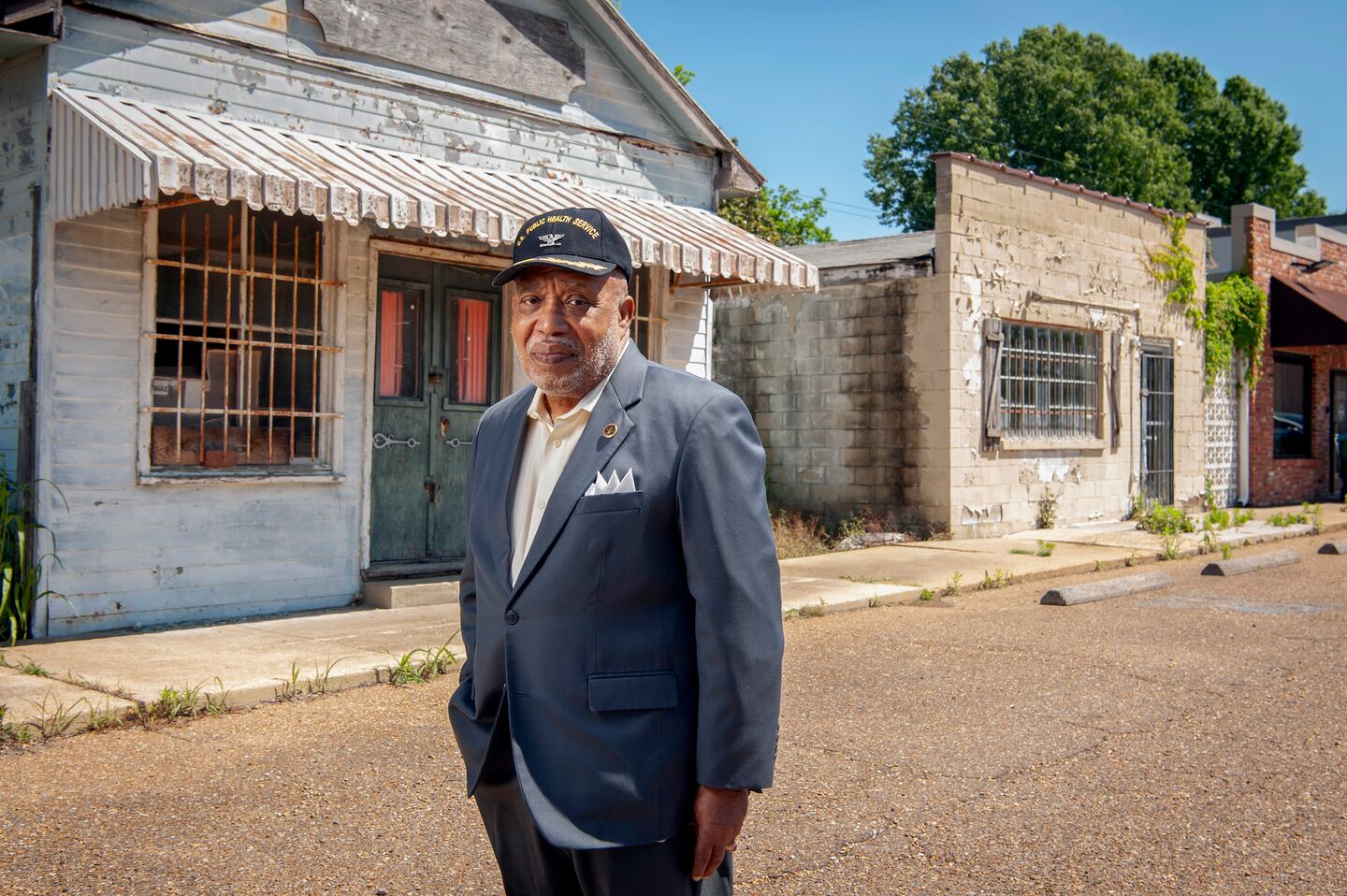
FAYETTE COUNTY, Tenn. — Wendell Wainwright, 75, was not surprised to see the news last month that the Supreme Court had dealt another blow to the Voting Rights Act.
Read more Maine’s Susan Collins reveals she’s long been diagnosed with a benign tremor
“I know this country,” he said, recounting how as a Black child in Fayette County, Tennessee, he had been hosed down during a desegregation march. “I’m just wondering, how long is it going to take Fayette County to pounce on the ruling?”
Many are asking that same question across this rural county in western Tennessee, less than an hour’s drive from Memphis, teeming with cattle, cotton and farmland. Just last year, Black voters won a new map for the county board of commissioners, after several lawsuits argued that the old one violated the landmark Civil Rights Act by diluting the power of minorities. All 19 of the current commissioners are white, even though Black residents make up about 25% of the county.
The new map includes three majority-minority districts that will be used in this year’s election. But now many Black residents are worried those districts might be erased, underscoring just how much the Supreme Court’s ruling could reverberate beyond Congress to local governments across the country.
The consequences of the court’s ruling for congressional districts have captured most of the national attention. But the provision known as Section 2 of the Voting Rights Act has played an even more vital role in shaping school boards, county commissions and city councils. From 1982 to 2024, nearly two-thirds of the more than 450 challenges invoking Section 2 involved local government practices, according to a University of Michigan study.
“Of course Congress matters,” said Kevin Morris, a voting policy scholar at the Brennan Center for Justice, a nonpartisan organization that works to strengthen democratic systems. But, he added, “the implications for the texture of everyday life are larger at the local level, and that’s where Section 2 was always the most effective.”
Rhea Taylor, the longtime mayor of Fayette County who presides over the commission, said in an interview there would be no attempt before 2030 to revert to the old map or redistrict.
But Black residents say they’re not convinced, having spent years fighting poor representation. Public schools, for example, which predominantly serve Black students, are severely underfunded by the county, residents say. This summer, more than 70 public school employees will be laid off. Many Black residents, most of them Democrats, blame the entirely white and conservative board of commissioners, most of whom are farmers with land who do not want to raise property taxes. Some believe such a tax could bolster school budgets.
Then there are frustrations over the lack of transparency into the board’s thinking, especially as transplants from Memphis move to the county in pursuit of cheaper, larger homes, and increase the population, which is now at about 45,000.
Just having a seat at the table, Black residents say, would help them feel informed and perhaps push for tangible changes.
“Because you don’t think you’ll ever get anything, you don’t know even know what to ask for,” said Civil Miller-Watkins, a leader in the local Black community who is running a long-shot campaign as a Democrat for U.S. Senate.
The lawsuits against Fayette County were filed in early 2025 by the Justice Department under President Joe Biden and the NAACP Legal Defense Fund. The suits, initially prompted by local complaints, were dropped after the county agreed to create the new map with three majority-minority districts.
Read more Trump nominates Cameron Hamilton to lead FEMA, a year after he was fired from the role
In two districts, there is only one Black candidate running in each race. And no Black candidates are running in the third district. Some view that as a consequence of having so little Black representation for years.
“People are so disgusted, they feel, ‘Why do it?’” said Rickey Hobson, 59, who was born and raised in Fayette County and whose parents once owned a grocery store in the Black community.
One of the candidates is Marandy Wilkerson, 67, a Democrat. She could become the only Black woman on the board next year if she defeats Dave Rhea, a Republican. She described the statewide and local redistricting as “something just thrown to your face, nothing to be done.”
Several years ago, there was one Black commissioner, a Republican. Decades ago, there were more Black Democrats, but the total gradually dipped, partially because of redistricting.
Before commissioners in 2021 passed the map that led to an all-white board, some of them warned they might be sued and cautioned against it. An outside lawyer hired by the county advised the commissioners to create majority-minority districts, but they went against that advice.
Taylor described the recent redistricting process as an arduous ordeal where “nobody comes out happy.” Politics and personal rivalries — including those between pro-growth members in one town and opposing farmers in another — also helped shape the 2021 map, according to residents who attended the meetings.
Myles Wilson, 80, one of two Black school board members, remembers the county’s “Tent City” in the 1960s. It was a poverty-stricken encampment for Black sharecroppers evicted by white farmers who were furious to see their workers registering to vote. For about two years, hundreds of Black families endured brutal conditions in what they called “Freedom Village,” including drive-by shootings from the Ku Klux Klan.
Much has changed since then. When Tent City was erected, Black people were in the majority in the county. But fear drove many of them away, then a lack of economic opportunity, and now struggling public schools.
Leaving Sunday service at Lagoshen Baptist Church, dressed in rodeo attire, Barbara Love said it was “unbelievable how people seem to want to turn things backward.”
Before driving back to see her horses, Alize and Easy Money, Love tinkered with the brim of her red cowgirl hat and hopped in her pickup. The way she viewed it, the county was missing out on what Black people could offer.
“If they don’t want us,” she said, “that’s OK.” She would still be here, relishing her land.
Read more Kennedy is driving a vast inquiry into vaccines, despite his new silence on the issue
This article originally appeared in The New York Times.


Post Comment