Mass. residents are largely using AI, but have more concerns than excitement about it, poll shows
Two-thirds of Massachusetts voters are more concerned about potential harm at the hands of artificial intelligence than they are excited about its innovative possibilities, according to a poll released Monday.
Read more Trump says new Air Force One will be taken out of service to be ‘maxed out’
The poll by MassInc Polling Group and sponsored by Anthropic, a top AI company, found differences between demographics — Republicans and people from higher-income households signaled they were least concerned, but even these groups said they were more concerned than excited about AI.
The consistency of feelings about AI across demographics is interesting because “that’s not always true in a poll,” said Steve Koczela, president of MassINC.
Even as people are worried about AI causing harm, they’re still using the technology — 61 percent of respondents reported using AI tools like Claude, ChatGPT, Google Gemini, or Copilot at least monthly. As AI is increasingly more ingrained into every part of society, the poll highlights that residents want the government to take the initiative to put in secure guardrails.
Harvard PhD student Nigel Hunter, who studies neuroscience, often uses ChatGPT and DeepSeek for coding in classwork but tries to limit his usage outside of school.
“I would prefer if [AI] slowed down,” he said.
The poll shows about 65 percent of voters are worried about job loss, the risk of misinformation, and environmental dangers at the hands of AI.
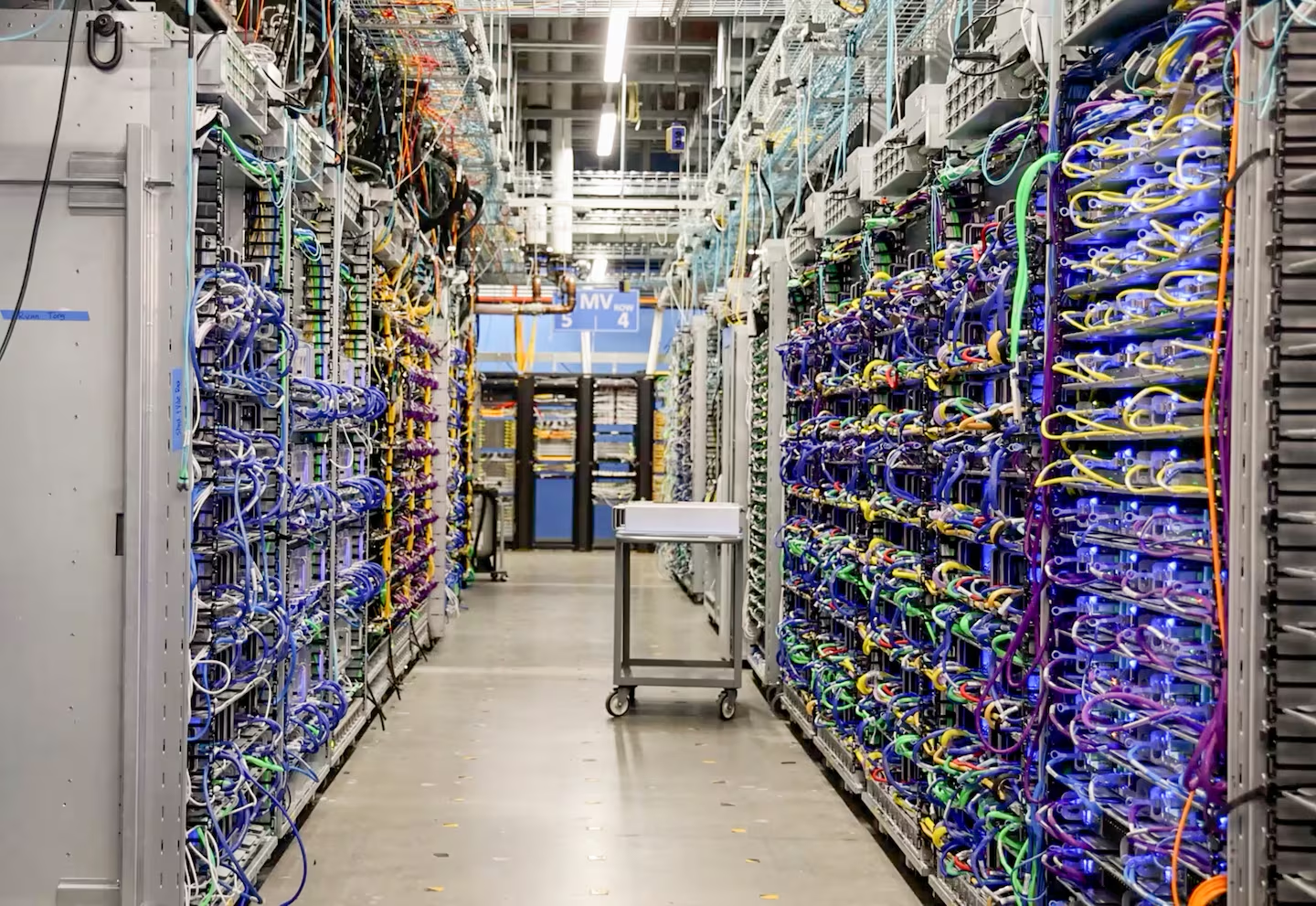
AI advancements are also drawing fierce resident opposition over their environmental impacts.Lowell residents have mounted protests over a data center’s impacts on the city’s skyline, and in Western Massachusetts, residents have concerns about an upcoming center’s water usage.
Without regulation, 82 percent of people said it was very or somewhat likely that AI tools would create serious risks, such as enabling chemical, biological, or nuclear harms or large-scale cyberattacks, according to the poll results.
Anthropic told the Globe this kind of study was needed after the company backed the state Legislature’s pending proposal in June on a new set of protocols that would force major AI companies to monitor and control any risk of harmful waste or uses of their programs.
According to the poll, respondents support a long list of regulatory steps, including: reporting urgent (and potentially fatal) problems within 24 hours; annually updating their safety measures; and paying up to $1 million for each safety violation.
Senator Barry Finegold, an Andover Democrat, has been helping lead the efforts around state policy for safer AI.
“We’ve developed a transparency framework to ensure that catastrophic risk never happens,” he said to the Globe.
Policymakers were forced to respond to to social media’s consequences after the tech became prominent. With AI, he said, the state’s goal is to get ahead of the curve and protect people from harm on the front end.
“We have learned from what California and New York have done,” Finegold said. “We can have both a robust economy and common-sense guardrails.”
That’s what voters who were polled said they were looking for. Nearly 80 percent said they want the state to be among the most secure states in AI regulation and nearly 70 percent said they don’t want to wait on the federal government for safety rules.
“It’s interesting because in Massachusetts, people are using it,” Koczela said. “It’s not that they’re avoiding it, they just want to be sure there are rules that these companies are required to follow.”
For Hunter, the threat to the environment from data centers and AI’s potential to cause widespread job loss outweigh the technological innovation.
“A lot of the tech companies behind these advancements don’t have the little guys’ best interest at heart,” Hunter said.
Hunter said Harvard has struggledto limit students from submitting AI–generated work for class.
Others may rely too much on AI and its constant iterations to want the companies to slow down.
Stanley Rameau, who teaches at Boston University and is also CEO of financial therapy company Renavest, said AI has helped make his life easier.
“This piece of technology is probably moving faster than any that we’ve seen,” he said.
Rameau said he pushes students to use AI in their studiesto get them acquainted with the technology. He also personally uses design and prompting AI programs daily for his business.
“It’s interesting and scary at the same time,” he said. With the rapid growth of AI, he asked, “Are we going to be able to keep up with core aspects of what we know everyday life to be?”
Read more This Duck Boats narrator can make more than $2,000 a week. Here’s how she navigates her finances.





Post Comment