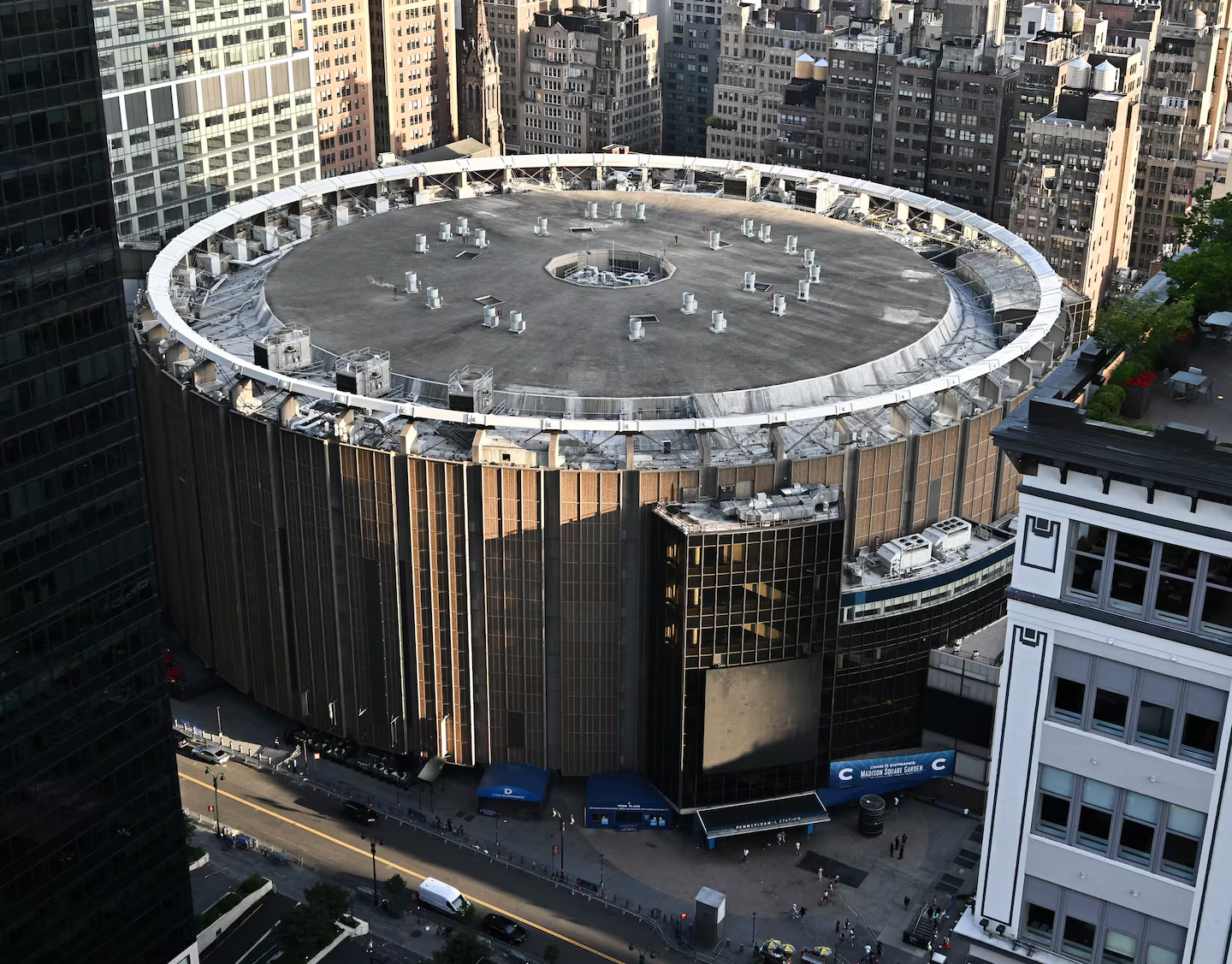
Madison Square Garden sues Wired magazine over LGBTQ+ tracking report
NEW YORK — The owners of Madison Square Garden have filed a defamation lawsuit against Wired magazine, claiming an article it published this month had manufactured a “false narrative” that the company was tracking the LGBTQ+ community for “discriminatory purposes.”
Read more Game 98: Will Red Sox make it 13 straight? Lineups and preview for series finale vs. Rays.
The article, published July 9 and titled “Madison Square Garden Kept a List of Gay Celebrities,” describes an internal “talent database” maintained by the Madison Entertainment Corp. that contains information about roughly 40,000 VIP guests from the business, tech, entertainment and sports worlds who frequent the arena in midtown Manhattan.
The database also includes information about the race, gender identity and sexual orientation of a small number of those celebrities, according to the article’s authors, Noah Shachtman and Maddy Varner. Ninety-three guest entries are marked as “LGBTQIA,” including those for singers Ricky Martin and Phoebe Bridgers.
Why exactly the venue notes this information in its database “is unclear,” the authors wrote.
Prior Wired reporting from Shachtman and Robert Silverman has described Madison Square Garden’s extensive surveillance operation, including its use of facial-recognition technology, and claimed that the security team put in place by its billionaire CEO, James Dolan, tracked a transgender woman throughout the arena over a two-year period.
The MSG Entertainment lawsuit argues that the July article and its promotion “falsely implied” that the arena, where the Knicks play and many stars perform, intended to “identify, track, rank, exclude or discriminate against LGBTQIA celebrities, artists, guests, fans and patrons because of their sexual orientation or gender identity.”
Instead, the “opposite is true,” according to the lawsuit, which claims that Madison Square Garden and “its affiliated entities” have contributed hundreds of thousands of dollars to Pride and LGBTQ+ organizations while partnering with Pride-associated sports and youth programs.
Besides Wired and other affiliated corporate entities, the lawsuit names Shachtman, Varner and Katie Drummond, the magazine’s global editorial director, as defendants.
The suit seeks compensatory and punitive damages as well as the “correction or retraction of the false and defamatory statements and implications,” among other remedies.
When reached for comment Saturday, a spokesperson for MSG Entertainment referred to a Thursday news release from the company, which describes the July article as “unethical and inflammatory.”
Drummond said in a statement Saturday that she was “proud” of the magazine’s work, adding, “I’m looking forward to continuing our accurate and newsworthy coverage.” In a separate statement, which the magazine posted online on Thursday, it called its reporting “accurate” and the lawsuit “baseless and ridiculous.”
The statement added: “We look forward to continuing our coverage of MSG, and on billionaire James Dolan’s use of technology across his entertainment empire. It’s one part of our wider mission and the critical job of journalists, now more than ever: holding power to account.”
Varner could not be immediately reached on Saturday, and Shachtman referred comment to the magazine, which had removed a paywall from the article following the lawsuit.
Beyond tracking some celebrities’ sexual orientations, Madison Square Garden’s talent database also assigns a “risk score” to roughly 400 VIPs, according to Shachtman’s and Varner’s reporting.
For example, rapper Fat Joe, a huge Knicks fan, is labeled “medium risk,” as is Anna Wintour. Hip-hop stars Freddie Gibbs and Lil Jon are “high risk,” while some celebrities, like rapper Lil Tjay, are banned from the arena altogether.
The database was part of a much larger collection of company documents, including internal emails and other corporate information, released in June by hacker group ShinyHunters, which often engages in cyberextortion.
The data was leaked after Madison Square Garden “failed to reach an agreement” over a ransom request from the group, according to three class-action lawsuits recently filed against the company.
In its lawsuit against Wired, MSG Entertainment claims that the data stolen by ShinyHunters — including the information about some guests’ sexual orientations — was taken from a standard customer relationship management, or CRM, platform, “the purpose of which is to serve MSG’s customers and to further inclusion,” including by extending invitations to LGBTQ+-related events.
Read more Why ‘Modern Lovers ‘Live’’ remains an unpunk classic
This article originally appeared in The New York Times.



Post Comment